Observer Training Guide
 There is one main binding, multiyear conservation measure covering tropical tuna stocks (bigeye, skipjack, and yellowfin) that currently includes, among other things, provisions for a 62-day full closure for purse seine fishing, a two-month closure in a specific area of the Convention Area for purse seine fishing, and bigeye catch limits for longline vessels.
The IATTC has also adopted conservation measures for specific tuna species, including North Pacific albacore and Pacific bluefin tuna. The requirements of these measures vary from limits on increasing fishing effort from current levels to limits on total commercial catches for a set period. If fishing for these species, fishers must become aware of the specific requirements.
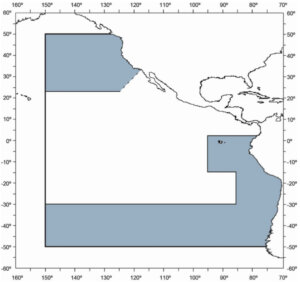
Regarding seabirds, IATTC requires the use of two different seabird bycatch mitigation measures, and fishers should also make efforts to ensure that any birds captured are released alive and in the best condition possible. This applies to longline vessels in the shaded area in the following map.
For sea turtles, longline skippers must ensure that their vessel has on board the right equipment to promptly release any incidentally caught animals (e.g., dehookers, line cutters, and scoop nets). Fishermen must also bring aboard, if practicable, any comatose or inactive turtle as soon as possible and foster recovery, including resuscitation, before returning it to the water.
IATTC also discourages shark retention (oceanic whitetip retention is prohibited), while requiring “full utilization” of those sharks that are retained (keeping onboard all parts except the head, guts, and skins to the point of first landing). In addition, no more than 5 percent of total landed shark weight can be composed of fins.
IATTC also requires full retention of bigeye, yellowfin, and skipjack tunas caught by purse seine vessels.