Purse Seine Guidebook
ISSF also requires its participating seafood companies — through its Conservation Measure 3.7 on Transactions with Vessels or Companies with Vessel-based FAD Management Policies — to conduct transactions only with vessels that deploy or redeploy fully non-entangling FADs, without any netting in any components.
Drifting FAD Ecosystem Impacts
Additionally, marine debris from lost and abandoned FADs, as well as impacts on sensitive areas and habitats caused by stranded FADs, are receiving increased attention in recent years.
While originally dFADs were constructed using natural materials such as bamboo, currently FADs are made from petroleum-derived products like plastic, PVC, and nylon nets, along with metals. Over time, petroleum-based materials degrade into macro- and microplastics, contributing to ocean pollution.
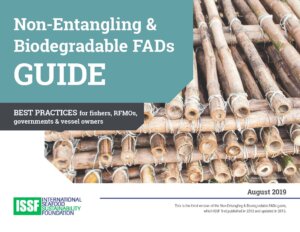
To address these issues, ISSF advocates for the use of non-entangling and biodegradable FADs. These alternatives are gaining traction among tuna RFMOs. As of November 2025, three out of four tropical tuna RFMOs have adopted timelines for transitioning to biodegradable FADs.