Purse Seine Guidebook
- Table of Contents
- Chapter 1
- Chapter 2
- Chapter 3
- Introduction
- Avoid Bycatch
- Minimize the Risk of Capture
- Reduce Bycatch Mortality
- Offset Unavoidable Bycatch Mortality
- 1. Sharks and Rays
- Sharks and Rays Commonly Encountered
- Reducing Shark and Ray Bycatch
- Target Large Schools
- Attract Sharks Out of the Net
- Fish Sharks in the Net to Release Them
- Modify Fishing Gear
- On Deck Safe Handling and Releasing Techniques
- Manual Handling Do’s
- Handling Medium Sharks
- Handling Stingrays
- Handling and Release with Bycatch Release Devices
- Light Equipment
- Shark Release Ramps with Hopper
- Mobulid Sorting Grids (with Vessel’s Crane)
- Releasing Whale Sharks
- Shark Handling and Release Do’s
- Shark Handling and Release Don’ts
- End Wasteful Shark Finning
- 2. Sea Turtles
- Most Common Bycaught Sea Turtle Species
- 3. Selective Tuna Fishing: Reducing Catch of Small Bigeye & Yellowfin Tuna
- Species Identification
- Yellowfin (30-45 cm)
- Bigeye (30-45cm)
- Yellowfin (46-110cm)
- Bigeye (46-110 cm)
- Yellowfin (>110 cm)
- Bigeye (>110 cm)
- Fisher Cooperation and Input
- Chapter 4
- Introduction
- International Organizations and Instruments
- Inter-American Tropical Tuna Commission
- Western and Central Pacific Fisheries Commission
- International Commission for the Conservation of Atlantic Tunas
- Indian Ocean Tuna Commission
- Commission for the Conservation of Southern Bluefin Tuna
- Further Notes on Data Reporting and Compliance
- Conclusion
- Credits and Citations
1. Avoid Bycatch: Before Fishing or Setting the Net
The first and most effective step is to avoid bycatch entirely. This involves preventing bycatch before a vessel even reaches a fishing area or approaches a Fish Aggregating Device (FAD).
Strategies include, for example, using fully non-entangling FADs, which reduce the risk of entangling vulnerable species such as sharks and turtles (see section on FAD structure impacts); avoiding known bycatch hot spots through adaptive time-area closures; and employing acoustic species discrimination technologies.
The latter enables fishers to remotely assess, via echosounder buoys, the species and size composition of tuna aggregations beneath a FAD, allowing them to avoid both navigating to and setting on FADs where undesired species or sizes are present.
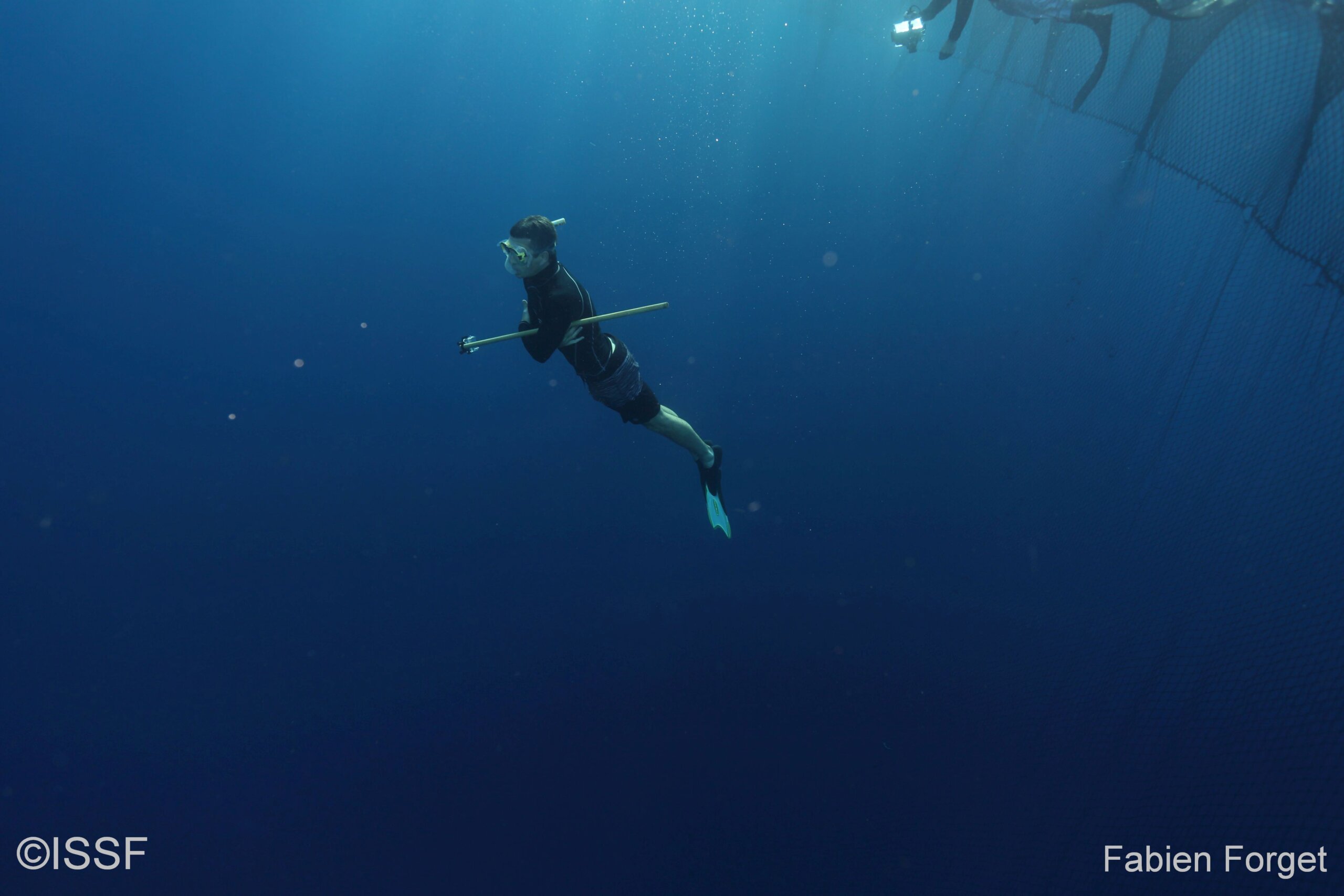
Scientist studying fish behavior. ISSF bycatch research cruise in the western Pacific, 2014. Photo: Fabien Forget (ISSF)